Our Professional Cabinet Refinishing Process
Containment
Seal work area to protect surrounding rooms from dust and overspray.
Establish negative air flow and use temporary barriers and zipper doors as needed.
Remove or cover floors, appliances, and fixtures to prevent damage.
Cleaning and Degreasing
Thoroughly clean cabinet surfaces to remove grease, oils, and residues.
Use industry-grade degreasers appropriate for kitchen environments.
Rinse and allow surfaces to dry completely before proceeding.
Sanding
Hand and/or mechanical sand to remove old finishes and provide a key for new coatings.
Feather edges and smooth transitions between repaired and original surfaces.
Vacuum and tack-wipe to remove all sanding dust.
Repairs / Bondo Where Required
Inspect for dings, gouges, and surface defects.
Perform wood or composite repairs; use high-quality fillers (Bondo or equivalent) where needed.
Sand repaired areas to blend seamlessly with surrounding surfaces.
Bonding Primer
Apply a high-performance bonding primer to promote adhesion on challenging substrates (laminate, previously finished wood, etc.).
Ensure full coverage and proper dry time per manufacturer instructions.
Professional Spray Application
Use professional-grade spray equipment for a smooth, factory-like finish.
Apply multiple thin coats for even build and color consistency.
Control environmental conditions (temperature, humidity) to optimize cure and appearance.
Controlled Finishing
Light sand between coats when required to eliminate imperfections
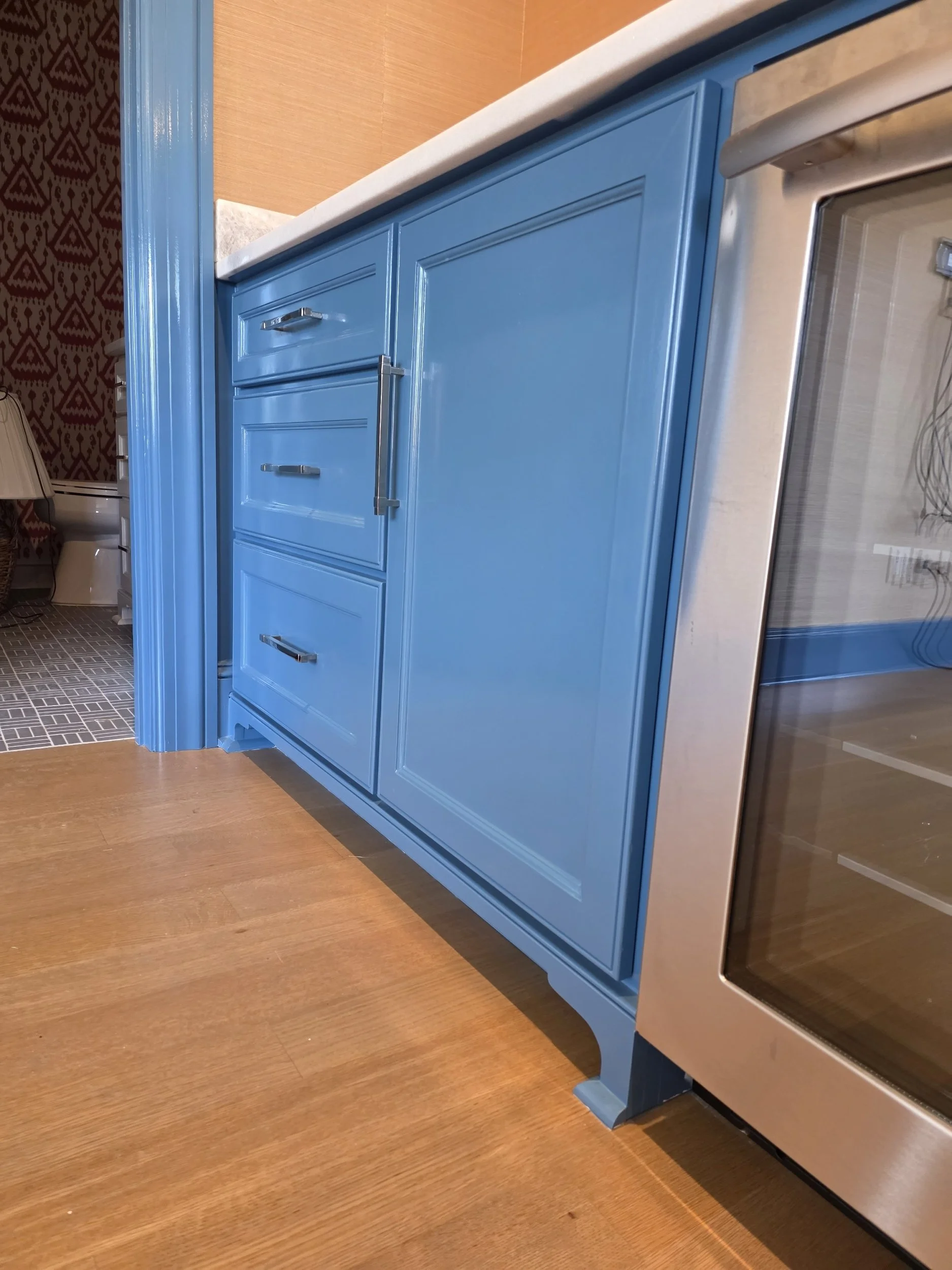
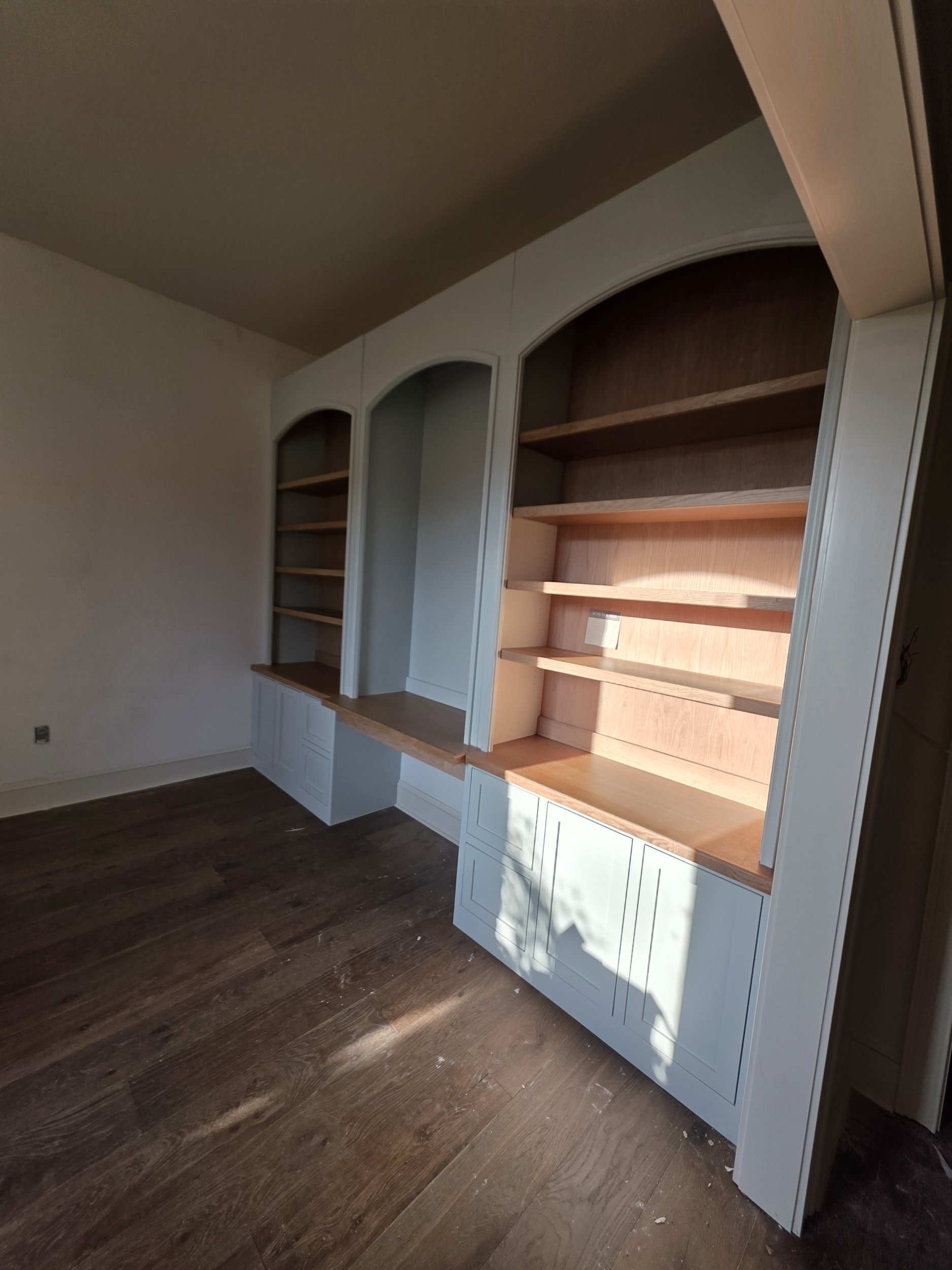
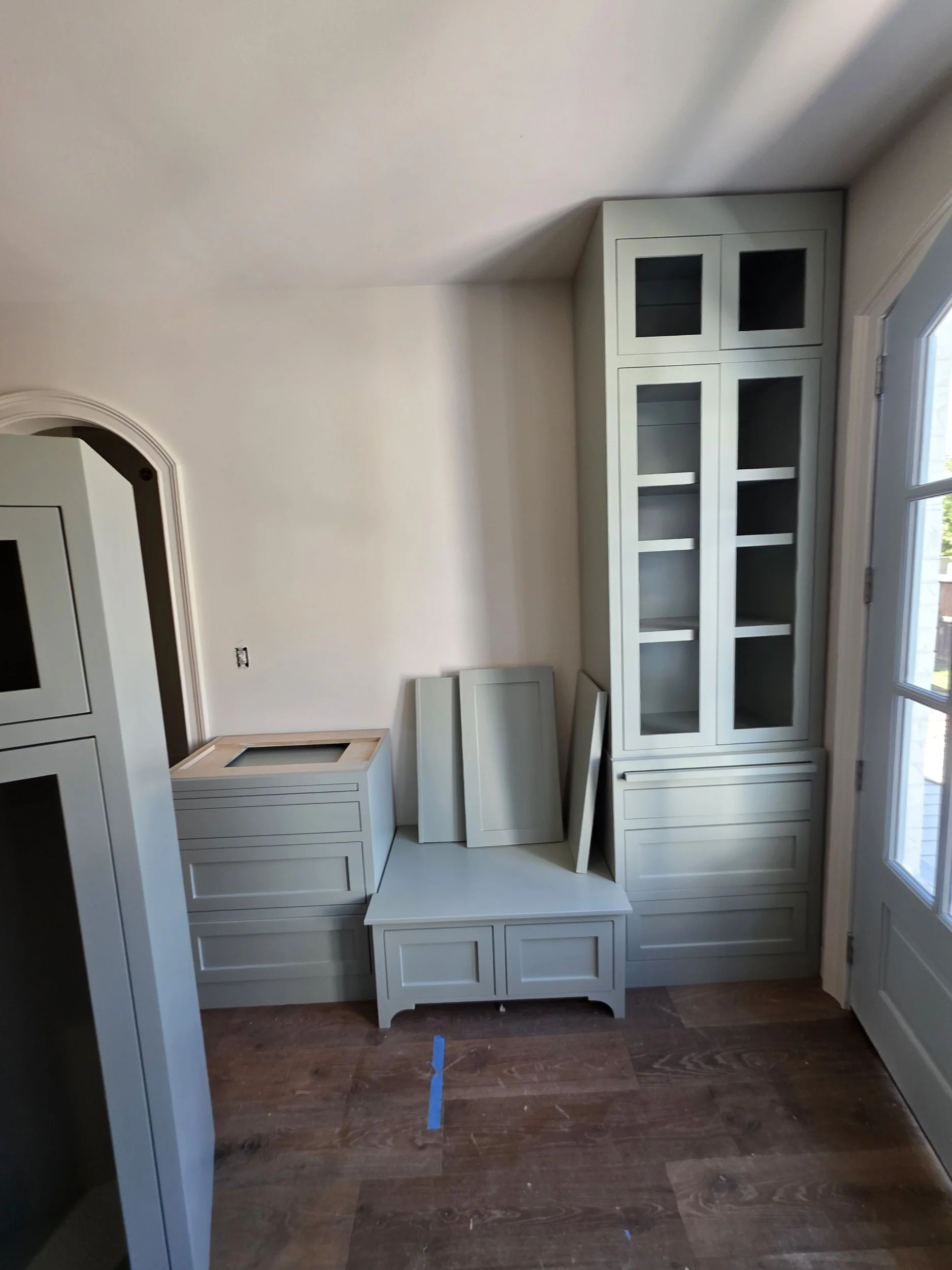
Your cabinets shouldn’t look just painted — they should look professionally finished. At Joseph Johnson Painting & Finishing LLC, we treat every cabinet as a feature, not a task: careful surface prep, expert priming, and smooth, even topcoats deliver a durable, flawless finish that highlights wood grain, color depth, and craftsmanship instead of obvious brush marks or uneven coverage. The result is cabinetry that looks factory-refined and built to last, elevating the entire room with a clean, high-end appearance.